BIZSAN

SZONYEG GALERIA

  • Home
  • Rugopedia
  • Rugs For Sale
  • Blog
  • Design Your Space
BIZSANSZONYEG GALERIA
⌕
Contact Bizsan Gallery
BIZSAN
SZONYEG GALERIA

Bizsan

Rug Gallery

Get in Touch

  • Contact Us
  • +36-1-396-8463
  • +36-70-341-8545
  • Email Us

We’re Here to Help

  • Visit our Gallery
  • FAQs
  • Delivery & Returns
  • Careers

Our Services

  • Size & Fitting Guide
  • Rug Care & Cleaning
  • BIZSAN Services

Our Company

  • Our History
  • Blog
  • Accessibility
  • Privacy & Terms

© 2026 Bizsan Carpet Gallery. All rights reserved.

BIZSAN

SZONYEG GALERIA

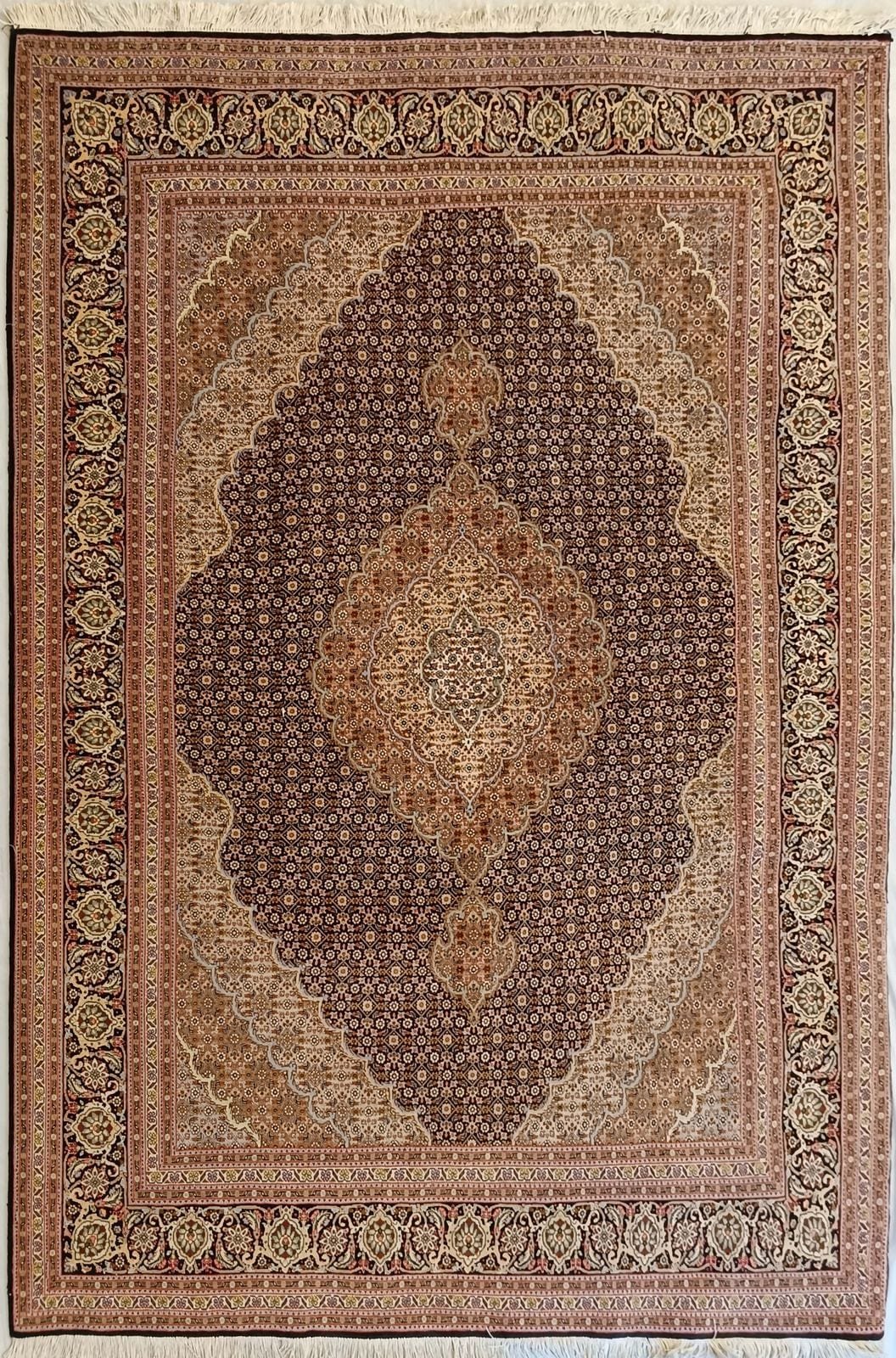
In StockIRANIAN TABRIZ HANDMADE WOOL CARPET

IRANIAN TABRIZHANDMADE WOOL CARPET

1 290 000 HUF
Details
  • Dimensions201 x 151 cm
  • Knots / m²500000
  • OriginIran
  • Origin typeTabriz
  • ColorsBlack, Brown, Terracotta, Beige
  • PileWool
  • WarpCotton
  • Type of dyeSynthetic
  • Age—
Carpet No.: 775200•Categories: Classical Collection
Delivery & Returns

EU delivery 5–8 working days. 14-day returns.

Tabriz

Tabriz (Mahi design): The weavers of these master workshops are the fastest and most skilled in Iran. Tabriz has one of the world’s finest wool rugs available in the market. The wool is excellent, Merino wool being the preferred quality utilized for Bizsan’s collection. Although there is a range of quality and variety of Tabriz mahi’s woven in and around Tabriz, the most common type of is 350.000knot-500.000knot/m2. This is denoted among rug merchants as Tabriz 40 radj or 50 radj. A radj is a measure equal to the length of a Persian cigarette, approximately 7 centimetres. Therefore a 50 radj rug is approximately fifty knots in 7 centimetres. The 60-80 radj Tabriz rugs are quite rare and prices reflect the number of these masterpieces woven in Tabriz. Silk is also utilized in finer pieces to accentuate details in the rug design. The Mahi design is composed of small intricate herati motifs repeated throughout the field of the carpet. These rugs are used either in modern or traditional rooms giving that special elegance and beauty to the space. The Tabriz Mahi gets its inspiration from Haji Jalili tabrizes woven around 1875. Tabriz (Floral Design): The weavers of these master workshops are the fastest and most skilled in Iran. Tabriz has one of the world’s finest wool rugs available in the market. Although there is a range of quality and variety of rugs woven in and around Tabriz, the most common type of Tabriz is 350.000knot-500.000knot/m2. This is denoted in Tabriz as 40-50 radj. A radj is a measure equal to the length of a Persian cigarette, approximately 7 centimeters. Therefore a 50 radj rug is approximately fifty knots in 7 centimetres, which is approximately 500.000knots/m2. The 60-80 radj is quite rare and prices reflect the number of these masterpieces woven in Tabriz. The wool utilized in most Tabriz master workshops is excellent quality, merino(kork wool) being the preferred quality utilized for Bizsan’s collection. The most common quality ranges from 500 000-600 000 knot although there are rare pieces that are 60-80 radj(750.000-1.300.000knot6m2), as a result the prices also reflect the number of these masterpieces woven in Tabriz. Silk is also utilized to accentuate details in the rug floral motifs. The floral patterns vary, either spread throughout the field of the rug with no central medallion or incorporated with a central medallion. The wide variety of pastel color combination’s used in these floral motifs are truly particular to the master workshops of Tabriz and no other workshop throughout the world has been able to replicate Tabriz designs or color dynamics sometimes incorporating 50-70 colors harmoniously. The number of rugs produced in Tabriz have become limited resulting in higher qualities and limited numbers woven. These rugs are quite durable due to there construction, wool quality and craftsmanship. Most employ synthetic dyes however a few rare pieces with Heriz designs can be found utilizing vegetable dyes. The most famous antique and sought after Tabrizs rugs are the Hadji Jalili Tabrizes that were produced by this famous workshop and workshops that were licensed by this family. They were produced around the later part of the 19th century(1875). They are known for their unique designs and craftsmanship which crowned this period of Tabriz artistry!

Need tailored advice?

Whether you're choosing the right size, looking for a custom commission, or want care guidance—our advisors are here to help.

Chat with an expertBook a showroom visit
Bizsan advisor